Momentous in Motion

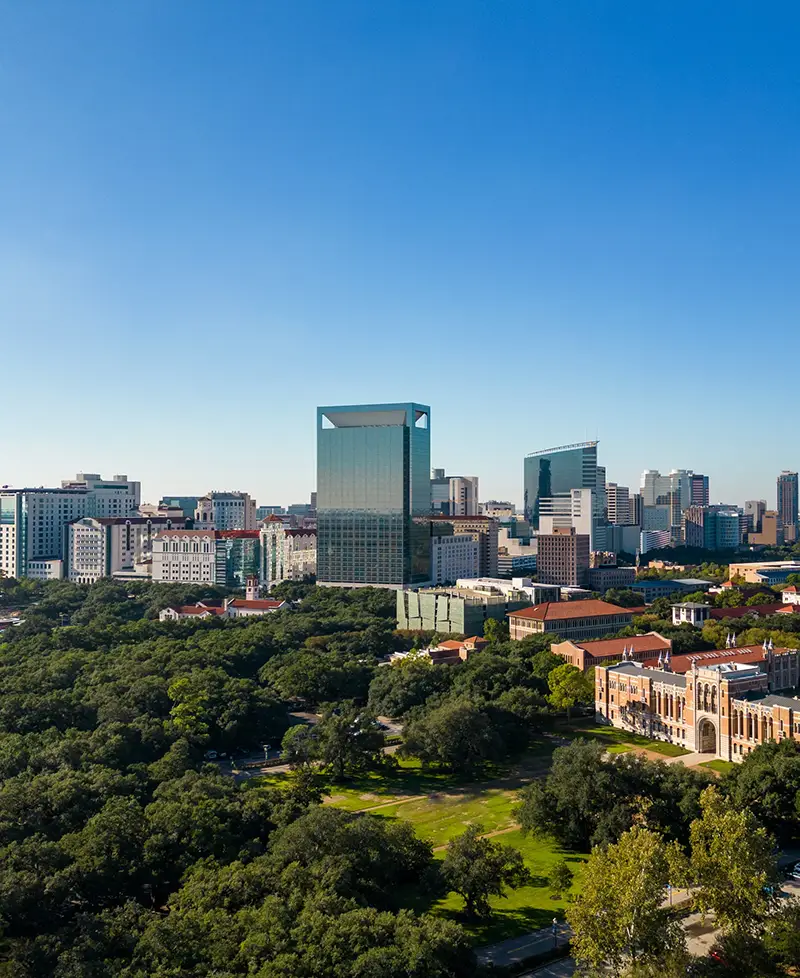
Rice University's ten-year strategic plan, Momentous, is transforming how we teach, discover, and serve. From Houston's Texas Medical Center to teaching and research in Paris, India, and beyond, Rice is translating a bold vision into real-world breakthroughs for our students, our city, and the world.

2025-2026 Momentous Implementation Update


Rice is making measurable progress across all drivers and catalysts of Momentous.

In Fall 2025, the Office of the Provost coordinated with academic schools and nonacademic units to develop an inventory of aligned initiatives. Over 900 programs, events, projects and initiatives are documented and moving us toward Momentous’ priorities. While the range of initiatives connected to Momentous reflects strong engagement and momentum across the university, we recognize that this number will change as goals are achieved and some initiatives may be added or removed from the list based on thorough review of alignment and progress. With this in mind, we have entered an important stage of prioritization that allows us to focus on measuring the impact of our most strategic, high-leverage efforts.

As of April 2026, Rice is delivering measurable progress across all drivers and catalysts of Momentous. The figures below represent the current academic year.

905

This year, we captured

905 active initiatives

aligned with Momentous across campus

61

are Complete

299

are Active & Expanding

394

are Active & Maintaining

18

are in a Pilot phase

78

are in a Planning phase

13

are Proposed

9

are aspirational in nature

33

need support to begin or expand

Advance Undergraduate Education

Rice is delivering on its promise of a truly personalized education - one that prepares students to lead and serve.

  • Record applications and rising national recognition reflect growing momentum: 36,791 students applied for Fall 2025, Rice rose to #17 in U.S. News & World Report, and 73% of graduates engaged in undergraduate research - already surpassing the 2030 goal of 70%.
  • Ensuring every student has access to the full Rice experience. Through the Access and Opportunity Fund, Moody Opportunity Fund, and the Rice Laptop Program, the university is removing financial barriers for students from day one.
  • Global learning is accelerating. Participation in global experiences grew to 31.8% of graduates - up 11 points in a single year - through programs like the Rice Global Paris Center, Rice-In-Country language immersions, and a new pre-health Fall in Paris semester launched in Fall 2025.
Read More on Advance Undergraduate Education

36,791

Undergraduate Applicants (Fall 2025)

13%
increase

95.3%

Six-Year Graduation Rate

4.9% vs. Fall 2020

#17

U.S. News Best Colleges & Rising

19.8%

Pell Recipients

12.4%

First-Gen Students
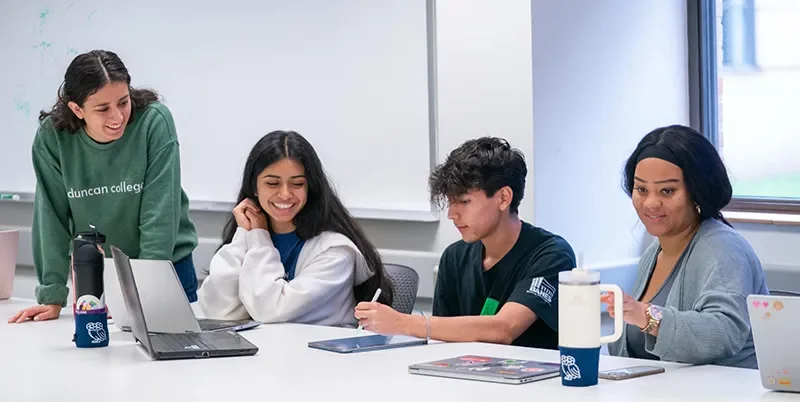
Rice Laptop Program students

1,708

Doctoral Students

1.1% vs. Fall 2024
FY30 Goal: 7%

2,477

Master’s Students

2.6% vs. Fall 2024
FY30 Goal: 10%

4

Graduate Programs Ranked Top 10 (U.S. News)

18

Graduate Programs Ranked Top 25 (U.S. News)

Student doing research using AI

Advance Graduate Education

Rice is becoming a premier global destination for doctoral and professional study.

  • Doctoral applications surged to nearly 11,000 - a 15% increase over the prior year - and Rice now ranks 3rd in the U.S. for hosting Foreign Fulbright Students, trailing only Harvard and Columbia.
  • Thrive@Rice, launched in the 2025-2026 academic year, this program provides a thorough orientation and community-building experience for all incoming doctoral students, ensuring belonging from the start.
  • Competitive investment in graduate talent continues with a stipend floor increase to $37,000 for Fall 2026.
Read More on Advance Graduate Education

World-Class Research Enterprise

Rice is expanding its research footprint through transformational faculty hiring and global partnerships.
  • 51 new tenure-track faculty joined Rice in FY25, including 16 senior star hires. 84% of faculty hired since 2022 have research tied directly to Momentous strategic priorities.
  • A 75-faculty cluster hire is underway, with 30 faculty already integrated across almost all schools and 45 additional hires planned over the next five years - spanning foundational AI, applied AI, and responsible AI ethics.
  • Global research networks are deepening, with formal partnerships now active with IIT Madras, the Paris Brain Institute, Université PSL, the University of Edinburgh, and the Venice International University, generating 50+ joint publications since 2022.
Read More on World-Class Research Enterprise
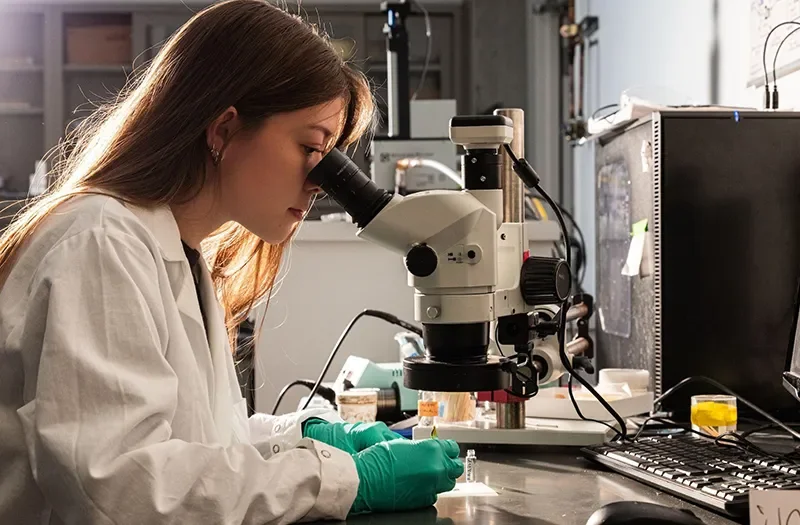
Student doing research in a Weiss School of Natural Science lab
Kraft Hall, home to the Kinder Institute for Urban Research and images from the Lifelong University

Build Thriving Urban Communities

Rice leverages its location in the most diverse city in the nation as a laboratory for solving urban challenges.

  • The Kinder Institute for Urban Research is entering its 45th year of the Houston Area Survey. In March 2026, the Kinder Foundation awarded a transformative $55 million grant to secure the institute's future - including $50 million for its endowment and $5 million for immediate Houston research needs.
  • The Baker Institute Migration Initiative produces rigorous, nonpartisan research on immigration, the U.S.-Mexico border, and North American trade - providing policymakers with the evidence they need to address some of today's most pressing challenges.
  • The Center for Latin American and Latinx Studies (CELAS) launched, organizing interdisciplinary research clusters on democracy, environment, urban life, and South-South connections, with international workshops in Colombia, Argentina, and Paris.
Read More on Building Thriving Urban Communities

Kinder Houston Area Survey 2026

New Survey Reveals How Houstonians Feel About the Economy, Environment and Community

The 45th annual Kinder Houston Area Survey explores shifting attitudes on economic uncertainty, environmental concerns and the importance of social connection across the Houston region.

Generate Sustainable Futures

Rice is positioned at the intersection of energy, climate, and environment in the energy capital of the world.
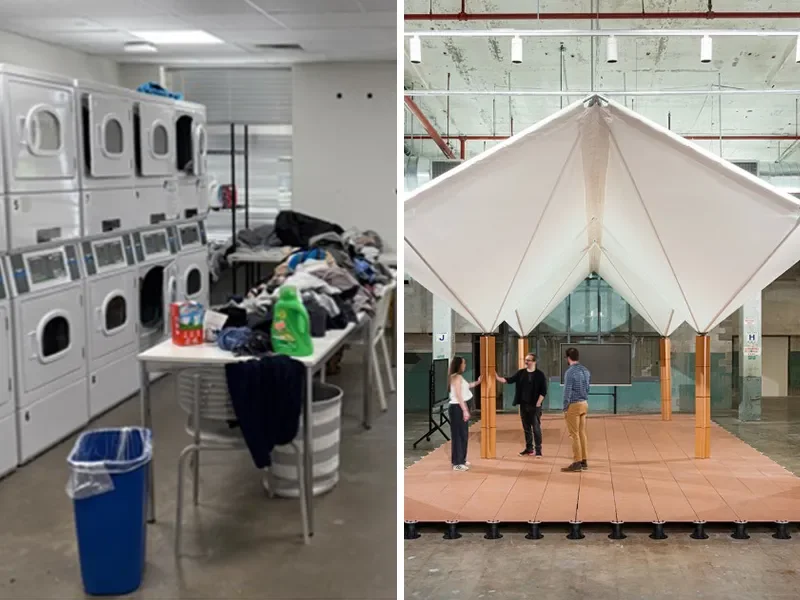
  • The Rice WaTER Institute is home to Menachem Elimelech, the world's most-cited researcher in desalination technology, and Shihong Lin, a top globally ranked researcher in electrochemical separation. A $3.5M Gates Foundation award is funding breakthroughs in eliminating PFAS forever chemicals from water systems.
  • The Geothermal Energy Working Group has submitted $6M+ in federal proposals to advance clean geothermal energy systems, while the E4 Initiative coordinates nine active sustainability working groups across campus.
  • Rice's campus is a living laboratory for sustainability, with on-site greywater recovery and rainwater capture systems piloted at McMurtry College and the O'Connor Building, and the Harris Gully Natural Area being restored to three historic Houston ecosystems.
Read More on Generate Sustainable Futures
Qilin Li standing next to a standalone sanitation system prototype and the Consortium for Enhancing Resilience and Catastrophe Modeling meeting at Rice
Left: Greywater Recovery System in the Laundry Room of McMurtry College: An autonomous, chemical free, low-energy system for recovery of greywater in households (up to 80% of household demand!). Right: Implovium Redux on Rooftop of O’Connor Building: An autonomous rainwater capture system that filters and purifies the water for beneficial uses and provides shade for meetings and events.

Rice Sustainability Institute

Explore Rice’s New Sustainability Working Groups

Faculty-led teams across Rice are advancing bold interdisciplinary research in climate resilience, sustainable energy, biodiversity, materials innovation and the future of resilient cities through the Sustainability Institute’s new working groups initiative.

Rice health innovation collaboration
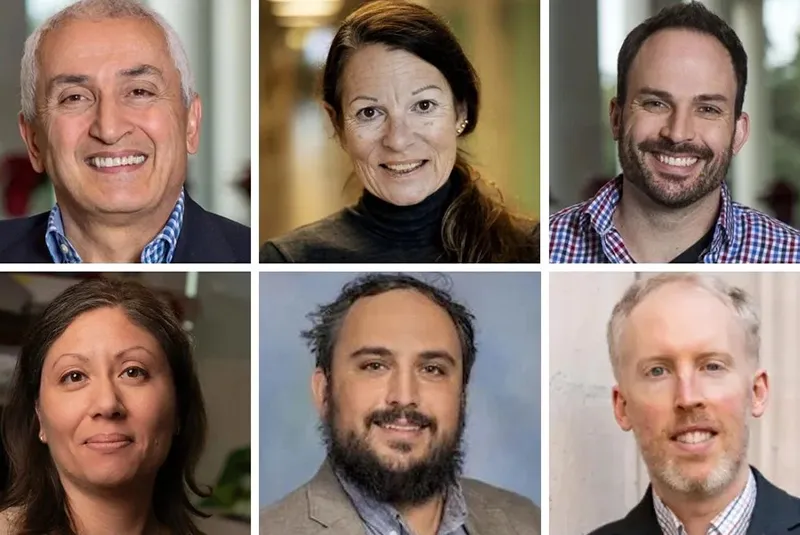
The Rice Brain Institute is led by a distinguished team of scholars: Behnaam Aazhang, Director of the Rice Brain Institute and Co-Director of the Neuroengineering Initiative, J.S. Abercrombie Professor of Electrical and Computer Engineering.; Pernilla Wittung-Stafshede, Co-Director of the Neuroscience Initiative, Charles W. Duncan Jr.- Welch Chair in Chemistry, Professor of Chemistry and BioSciences, CPRIT Scholar in Cancer Research; Jacob Robinson, Co-Director of the Neuroengineering Initiative, Professor of Electrical and Computer Engineering, BioEngineering. Co-founder of Motif Neurotech; Rosa Uribe, Co-Director of the Neuroscience Initiative, Associate Professor of BioSciences, CPRIT Scholar in Cancer Research; Simon Fischer-Baum, Co-Director of the Brain and Society Initiative, Associate Professor of Psychological Sciences; Harris Eyre, Co-Director of the Brain and Society Initiative, Harry Z. Yan and Weiman Gao, Senior Fellow for Brain Health and Society, Senior Advisor for Neuroscience, Office of Innovation, Faculty Scholar, Baker Institute for Public Policy.
The Global Brain Economy Initiative and a demo at the Center for Human Performance kickoff event

Lead Innovations in Health

Rice is becoming the leading non-medical institution in health research and innovation.

  • Project Metis: In partnership with the Center for Houston’s Future, the Greater Houston Partnership, UTMB, and Memorial Hermann, Rice launched Project Metis to advance global leadership in brain health and mental wealth. This initiative focuses on the "emerging brain," supporting healthy cognitive development from early childhood.
  • The Rice Brain Institute, launched in October 2025, unites engineers, scientists, humanists, and clinicians to tackle brain health. At Davos in January 2026, Rice announced the Global Brain Economy Initiative, placing the university at the center of international policy on cognitive health. RBI is led by a distinguished team of scholars:
  • The ENRICH office is responsible for Rice’s integration into the TMC and provides students with a unique personalized scale for experiential learning. In 2025, over 700 Rice students were appointed to TMC institutions - a critical pathway for both undergraduate and graduate success.
  • The ENRICH office also manages a growing portfolio of seed grants - including 67 proposals across two programs resulting in 16 awards and nearly $700,000 in funding for collaborative health research.
  • Rice360 Institute for Global Health is working to halve neonatal mortality in African hospitals by 2030 through NEST360, while the new Graduate Certificate in Global Health Technologies will open these pathways to students across all disciplines.
  • Human Performance: A joint program with Houston Methodist awarded $144k to three teams focused on orthopedic and rehabilitation breakthroughs.
Read More on Lead Innovations in Health

ENRICH-led TMC Appointments

by TMC Institution in 2025

Baylor College of Medicine
39%
MD Anderson Cancer Center
38%
UTHealth Houston
18%
Houston Methodist
5%

Notably, 71% of these appointments were for undergraduate students, demonstrating Rice's commitment to early-career immersion in high-impact health research.

Responsible AI

Rice is pioneering an ethical, human-centered approach to AI across research, teaching, and discovery.
  • Rice launched a Bachelor of Science in Artificial Intelligence in Fall 2025, requiring courses in ethics and the history of AI - ensuring graduates understand not just how to build AI systems, but how they affect society.
  • A $500,000 NEH-funded Center for Humanities-based Health AI Innovation (CHHAIN), jointly led by Rice’s Medical Humanities Research Institute and the Center for Medical Ethics and Health Policy at Baylor, is setting the national standard for ethical AI in healthcare.
  • 249 Rice faculty and staff have enrolled in the university's asynchronous AI teaching course, Teaching with AI at Rice: From Curiosity to Confidence, and 45 grants have been awarded to faculty experimenting with responsible AI in the classroom.
Read More on Responsible AI
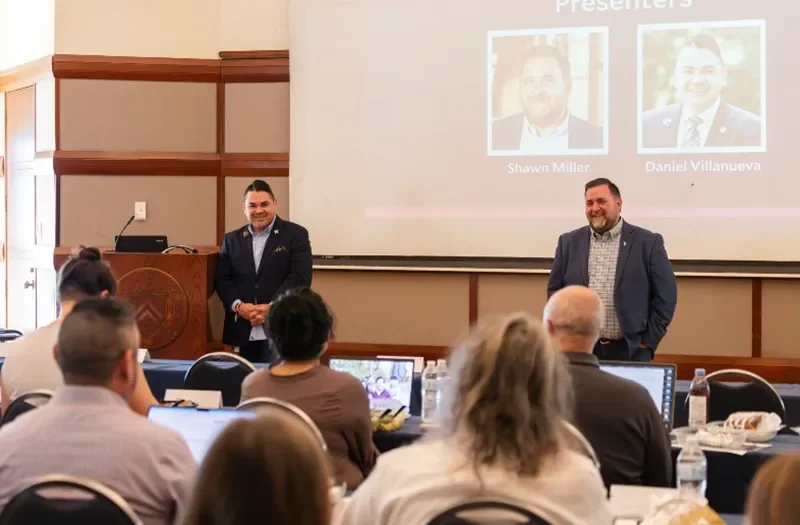
Credit: Donald Soward, D2 Studios and photos by Brandi Smith
On AI Literacy Day, Shawn Miller and Daniel Villanueva partnered with the Division of Student Life and Undergraduate Education to explore how AI can support staff navigating complex systems, help staff make more informed decisions, and create more equitable and responsive student experiences.

Responsible AI at Rice

See How Rice Is Shaping the Future of Responsible AI

Forty-two funded projects are advancing AI fluency, ethical innovation, and interdisciplinary teaching across the humanities, engineering, sciences, and beyond.
Electric shuttle buses

Empowered Campus Culture

Rice is investing in the people who bring Momentous to life every day.

  • A $20M Total Rewards initiative is closing compensation gaps with peer institutions, including targeted salary adjustments, expanded parental leave, doubled tuition reimbursement, and a new portable dependent tuition benefit usable at any accredited U.S. university.
  • 1,200 Asana licenses have been deployed university-wide, with over 800 faculty and staff already using the platform - streamlining collaboration and making it easier to connect daily work to the Momentous mission.
  • Nuventive, a centralized strategic plan management platform, is on track for a Summer 2026 launch, providing transparent, data-informed tracking of progress across all 33 strategic objectives.
Read More on Empowered Campus Culture

In our second year of a ten-year journey, the progress is real. We are moving the university forward across every dimension of Momentous — from top-tier teaching and groundbreaking research to a transformed campus culture.

Looking toward 2035, Rice is focused on staying strategic, staying connected, and staying accountable — measuring progress against 33 core objectives and ensuring every effort drives meaningful impact across the university.

The achievements to date — the Rice Brain Institute, $55M for the Kinder Institute, $20M in Total Rewards, and a rise to #17 — are not endpoints. They are proof that a bold vision, pursued with discipline, can redefine what a university is capable of.

Together, we are delivering

Personalized
Scale for
Global Impact.
campus drone texas

Behind the process

Rice President Reginald DesRoches stated in his inaugural address that his vision for the university is that Rice be a premier research university with much greater visibility and with graduate programs of the same distinction as the university's undergraduate program, all while maintaining Rice's commitment to excellence in undergraduate education and the values of diversity, equity and inclusion. Following his inauguration, Provost Amy Dittmar led a ground-up, university-wide process to develop and launch the university’s strategic plan, Momentous.

  1. Organize Planning Process and Leadership

    The journey for this new plan began more than a year ago with the culmination of the University’s previous long-term strategic plan. The process has been thorough, with research gathered from a wide range of stakeholders. This plan comes directly from our community.

    View Planning Site
  2. Gather Stakeholder Feedback

    Between January and April, 32 focus groups were held convened around a specific topic, including research, infrastructure, DEI and the Rice experience.

  3. Draft, Refine, Then Finalize the Plan

  4. Develop Implementation Plan

  5. Official Launch

  6. President DesRoches and Provost Dittmar embarked on a tour of eight cities and each of the schools to connect with the broader Rice community and share our Momentous vision.

  7. Program manager Brittni MacLeod was hired to lead the implementation, measurement, and reporting of the strategic plan's objectives and key results. MacLeod conducted 39 meetings with individuals assigned to own various components of Momentous.

  8. Momentous OKR reporting is underway and we are testing a strategic plan management tool

  9. Finalized inventory of aligned initiatives across campus and introduced regular Momentous forum meetings

  10. Rolling out strategic plan management platform for future reporting and reviewing initiatives flagged as planning, proposed, piloting, aspirational, or needs support

Brittni S. MacLeod, Ph.D.

Brittni S. MacLeod, Ph.D.

Program Manager, Office of the Provost

Send Email

As program manager in the Office of the Provost, MacLeod leads the implementation of Rice University’s Momentous strategic plan, coordinating initiatives that span academic affairs, research, undergraduate and graduate education, student support and more.

MacLeod works closely with senior leadership, initiative owners and campus partners to build the structures, processes and tracking tools needed to translate the university’s strategic vision into measurable action. She provides project management, prioritization frameworks and strategic counsel to ensure progress across university-wide goals.

Bringing Momentous to Life

The people across our Rice community who turn big goals into real progress are the heart of Momentous. Students, faculty, staff, alumni and our valued partners all make the plan’s vision more tangible every day. We’re proud to recognize their creativity, dedication, and collaboration in advancing Rice’s vision and making a meaningful impact on campus, in Houston and around the world.

We Want to Hear From You

Momentous touches all aspects of the university and campus, and we want it to reflect the voices and needs of the entire Rice community. Please use this form to share feedback or questions about the plan. Every submission is reviewed by staff in the Office of the Provost and helps us make Momentous more effective and transparent for everyone at Rice.